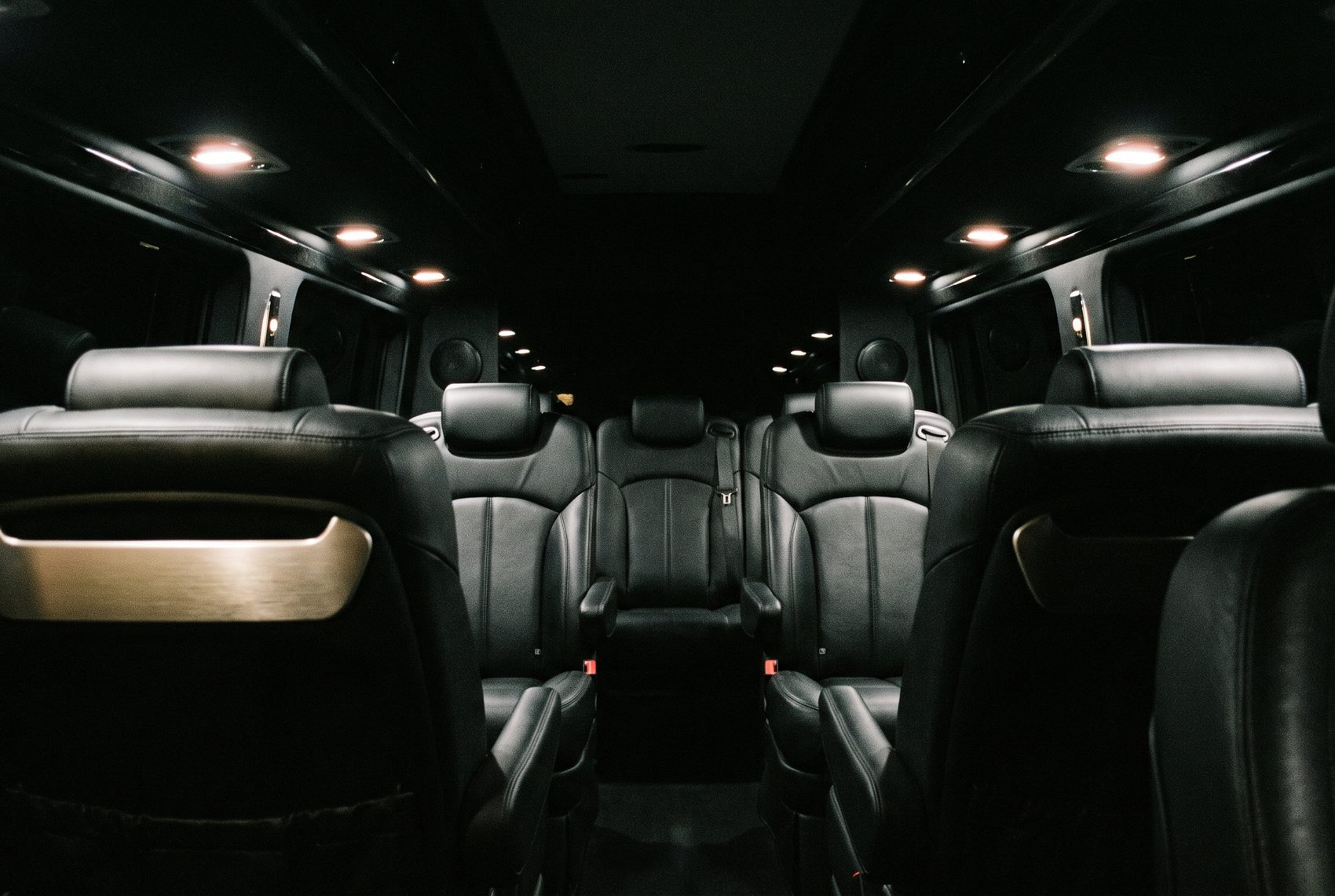
Group ground travel in Charlotte works differently from booking several individual cars: one Mercedes-Benz Sprinter van (or a coordinated set for larger groups) keeps a team on one vehicle, one driver, and one arrival time instead of a caravan of SUVs arriving at different moments. LuxeRide runs group trips through the same named, background-checked chauffeur circle and $1,000,000 insurance standard as its solo rides, with a single point of contact responsible for the day.
Moving one executive is a logistics problem with one variable. Moving twelve is a different category of problem entirely — not because the vehicle is bigger, but because the failure math changes. A single late car inconveniences one person who can text ahead. A single late van holds a dinner reservation, a site tour, a board meeting, and eleven other calendars hostage at once.
Most ground vendors treat group travel as the same service with more seats. It isn’t. Group work fails in places solo work never touches: at the meeting point, on the manifest, in the moment somebody’s flight slips and the group has to split. Here is what actually goes wrong, and what has to exist before it does.
Why do groups get split into a caravan of SUVs?
Because it is the easiest thing for a vendor to sell. Three sedans are three bookings a dispatcher already knows how to make. But a caravan quietly hands you four problems: four arrival times instead of one, four drivers who may not know each other, four different reads on the route, and a group that arrives strung out across fifteen minutes instead of together.
Sometimes a caravan is right — separate hotels, staggered agendas, a principal who needs to work alone in the car. Often it is just the default. We carry Mercedes-Benz Sprinter executive vans alongside the SUV fleet specifically so the vehicle can match the shape of the trip instead of the other way around: one vehicle, one driver, one arrival, the whole team in the same conversation on the way in. For larger groups we run multiple Sprinters as a coordinated unit — same house, same standard, staged together, not three unrelated bookings that happen to share a destination.
The question to ask a vendor is not “can you handle twelve.” Almost anyone can produce twelve seats. It is “will the twelve arrive as one group, and who is responsible for making that true.”
What is the hardest part of a group pickup — and it isn’t the driving?
It is the meeting point. Twelve people exiting a terminal do not exit together. They clear customs at different speeds, stop for coffee, take a call, go the wrong direction at baggage claim. At Charlotte Douglas this plays out across a long curb and multiple doors, and the natural result is a van idling somewhere a third of the group can’t see while the other two-thirds text each other.
So group pickups need something a solo pickup does not: a named person on the ground. For group arrivals we stage a chauffeur inside at the arrivals meeting point with a LuxeRide sign — the same meet-and-greet mechanism we use for solo principals, but doing heavier work here, because it turns a scattered dozen into an assembled group before anybody has to find a vehicle. The van stages where it can be reached, not where it happens to fit, and it does not move until the count matches the manifest.
That count is the second half. Before a group trip we build a manifest: names, inbound flights, phone numbers, and who is authorized to make a call if plans change. It is unglamorous and it is the whole difference between “we think everyone’s here” and knowing.
One car late is an inconvenience. One van late is a room full of people waiting for it.
What happens when one person’s flight is late and eleven others are standing there?
This is the decision every group trip eventually forces, and the vendors who have never thought about it in advance make it badly — usually by holding the whole group for the straggler, because nobody wants to be the one who left someone at the airport.
The right answer is decided before the day, not at the curb. On a group trip we identify a single point of contact on your side — the planner, the EA, the team lead — and one named LuxeRide contact on ours, so there is exactly one conversation when the plan has to change and no committee forming on a curb. If a flight slips, the group moves on schedule and we run a second pickup for the late arrival. Nobody negotiates this with a driver who has no authority to decide it.
Because we track inbound flights against actual landing times rather than the schedule, we usually see the slip well before the group does. A delay you learn about at the gate is a problem. A delay you learn about an hour out is a plan.
What does a roadshow or multi-stop day actually require?
Roadshows, investor days, site tours, recruiting weeks: the pattern is the same. Multiple stops, a tightening schedule, and a vehicle that must be exactly where the group leaves each building rather than “on the way.” The failure mode is a driver who releases after drop-off and has to be re-summoned, so the group loses eight minutes at every stop and arrives at the last meeting of the day forty minutes behind.
What that requires is dedicated time, not a series of point-to-point rides. On multi-stop days the vehicle and chauffeur stay with the group for the block — staged at the exit, luggage and materials secure in the vehicle between stops, no rebooking, no re-explaining the agenda to a new driver at 2 p.m. The chauffeur has the day’s itinerary in hand and knows what happens after this stop, which is what lets them be positioned before the group walks out rather than after.
It also requires knowing Charlotte specifically: which Uptown buildings have a workable loading zone and which force a lap around the block, what the I-77 corridor does between 4 and 6, how long the transit from Ballantyne or the University area really takes when the schedule says thirty minutes. That knowledge lives in a local house that drives the same routes every week. An app assigning whichever van is nearest cannot supply it.
Who is actually driving the group?
The same standard as every other LuxeRide trip, which for group work matters more, not less — the group is the company’s impression of itself in front of candidates, clients, or investors.
Every chauffeur is licensed, background-checked, and employed or directly known by the house — a family core led by Marios Bonilla Jr., with a vetted bench behind it. On accounts, group trips draw from the same small named circle that already runs your solo rides, so the person handling twelve of your people on a Tuesday is not a stranger the app produced that morning. Every vehicle carries $1,000,000 in commercial coverage, and a certificate of insurance naming your company as an additional insured is available before the trip, which is usually a requirement rather than a courtesy when a group is involved.
The commitment is the same one that covers our solo work: if we are more than fifteen minutes late, your next ride is 20% off. A standard that applies to one passenger and quietly loosens for twelve is not a standard.
What to have ready when you request group travel
Group requests move faster when four things come with them:
- The count and the shape of the day — how many people, how many stops, and whether the group stays together or splits.
- Inbound flights — flight numbers, not just arrival times, so we track the aircraft rather than the itinerary.
- One point of contact — the person authorized to make the call if the day changes.
- Requirements up front — COI with your company as additional insured, NDA, billing terms, or any vendor onboarding your procurement team needs.
None of this requires an app or an instant online booking. Group travel is a conversation with someone who will still be responsible for it on the day. Tell us the shape of the trip and we will tell you what it actually needs — including when it is a caravan of SUVs rather than a van.