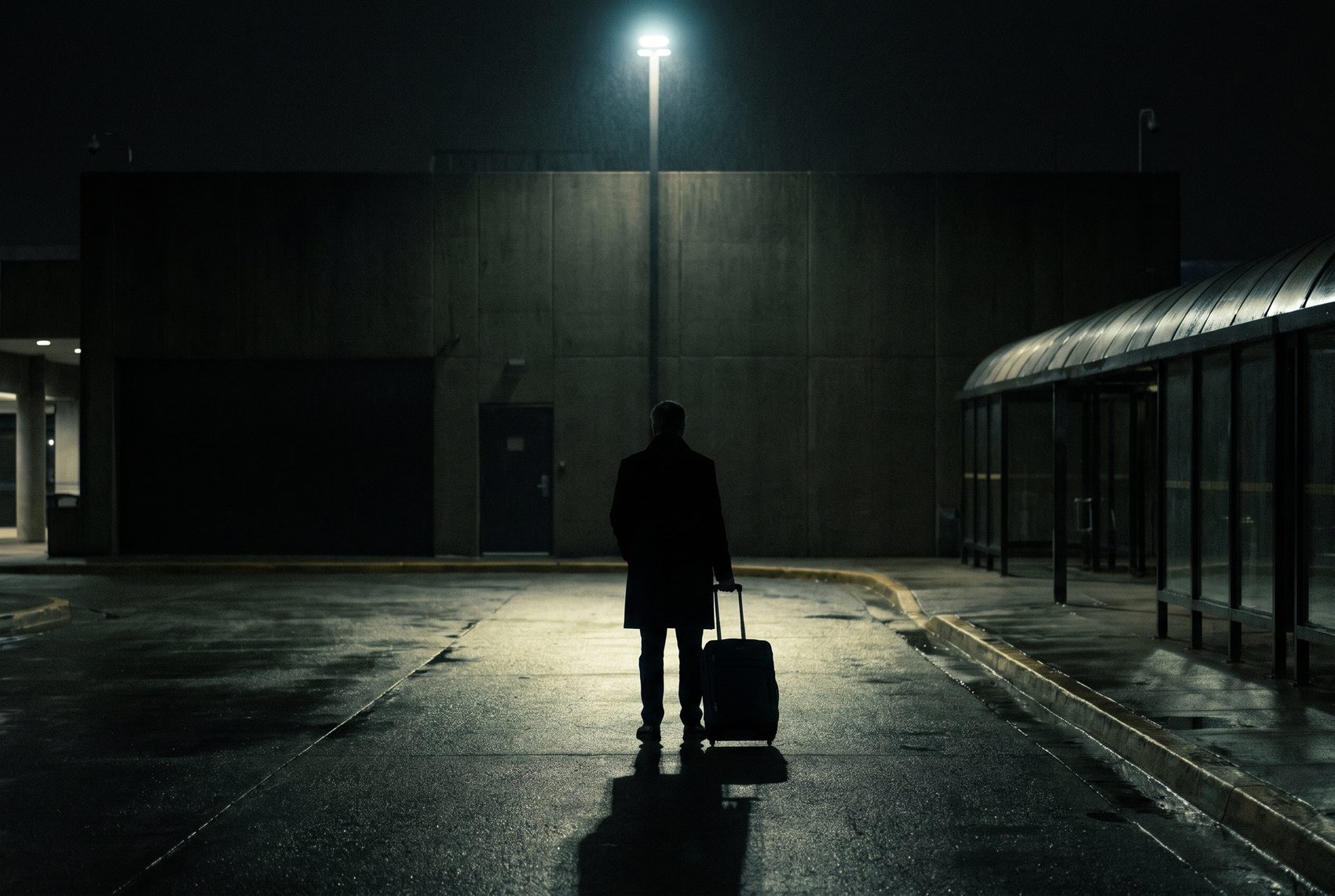
When a job candidate’s airport car is late, the cost isn’t the fare — it’s the company’s first impression before the interview even starts, at a moment a recruiting team has already spent months and real budget to reach. LuxeRide removes the risk with flight-tracked pickups, a 15-minute on-time buffer, and a service credit — 20% off the next ride — if that buffer is missed, rather than leaving punctuality to hope.
You spent six weeks getting to this finalist. Sourcing, screening, three rounds, a compensation conversation that took some care. The offer is not signed. The on-site is the thing that decides it. So you booked a flight, blocked the leadership calendars, and arranged a car from the airport.
Then the car is not there.
The candidate is standing at the curb at Charlotte Douglas, phone in hand, watching the pickup time pass. They text the recruiter — you. You are in a meeting. By the time you see it, they have already decided something about your company, and it is not the thing you spent six weeks building.
That is the part most ground bookings get wrong. They treat the car as a fare. For a finalist visit, the car is not a fare. It is the first operational thing your company gets to prove, before a single interview starts.
Why is the airport car the first impression, not the interview?
Because it happens first, and because it is unsupervised. The candidate meets your company alone, at a curb, with no one from your team present to soften a bad moment. Everything else in the day is choreographed. The car is the one part that runs without you in the room.
So the candidate reads it as a signal. On time, clean, a chauffeur who knows their name and where they are going — that says the company is organized, that people here are looked after, that details are handled. Late, uncertain, a driver who is not sure of the address — that says the opposite, and it says it before the first handshake.
Finalists are almost always evaluating you as hard as you are evaluating them. Someone good has other options. The visit is where they decide whether this is a place that runs well or a place that will be a low-grade source of friction for the next three years. A curb they had to solve themselves is a data point, and it is on the record in their memory long after the day ends.
What does a late candidate car actually cost?
Run the arithmetic on the thing you are actually protecting.
The car is a small line item against the true cost of the visit — the flight, the hotel, the leadership hours pulled into a full interview loop, and the weeks of pipeline work that got the finalist to the airport at all. A missed or late pickup does not put that line item at risk. It puts the whole visit at risk, because it shifts the candidate’s mood before the day starts and puts your own credibility as the coordinator in question.
There is a second cost that does not show up on any invoice. The candidate talks. People in the same field know each other, and a rough finalist experience becomes a story they tell. Your employer brand is built and eroded in exactly these small, unsupervised moments — the ones a candidate did not expect you to get right, and either you did or you did not.
None of this is an argument for spending more. It is an argument for removing a specific risk: the risk that the one part of the day you handed to an outside vendor is the part that undoes the rest.
A no-show does not cost a fare. It costs the hire.
How do you remove the risk instead of hoping it goes well?
You stop booking a car and start running a system. The difference is not the vehicle. It is what stands behind the vehicle when a flight moves or a driver falls through.
Here is the mechanism we run for candidate travel, in the order it matters.
A named chauffeur, assigned before the trip. Not a class of vehicle from a marketplace, and not whoever is nearest when the app pings. A specific person from the same small circle that drives your account — for us, that circle is led by Marios Bonilla Jr., with a named backup already identified for the same trip. The candidate is not handed to a stranger. Someone whose name you know owns the pickup.
Flight tracking against the actual landing, with buffer built in. Flights move. A ground program that only knows the scheduled time is guessing. We track the real inbound and hold a fifteen-minute buffer, so an early arrival or a delay does not turn into a candidate waiting or a chauffeur circling. Our on-time record — 99.9% measured against actual landing, not the schedule — is a result of that tracking and buffer, not a slogan.
A named backup for the same trip. The failure mode that ruins a finalist visit is the single point of failure: one driver, no fallback, and a cancellation you learn about at the curb. Every candidate trip carries a second named chauffeur already briefed on the run, so a problem on our side is our problem to absorb, not the candidate’s to discover.
A confirmation sheet, so you are not babysitting a booking. Before the trip you get one sheet: who has the pickup, the vehicle, the tracked flight, the buffer, and one contact to text if anything moves. You do not sit in your meeting wondering whether the car will show. It is written down, assigned, and handled.
That last point is the one recruiters feel most. The job of coordinating a finalist visit is already a lot of held breath. The car should be the part you stop thinking about, not the part that pulls you out of a meeting.
What does this look like across a real visit?
A candidate flies into CLT for a Thursday on-site. The inbound is tracked from the night before. Marios has the pickup; the backup is briefed. The flight lands eleven minutes early — the buffer already covers it, and the chauffeur is in position with the candidate’s name, not circling arrivals hoping to time it.
The candidate steps out to a chauffeur who greets them by name and knows exactly where the office is. Uptown, SouthPark, Ballantyne, or the Fort Mill corridor — the route is known, not searched for at the wheel. Between the airport and the office, the candidate has a quiet backseat and a few minutes to arrive composed instead of frazzled. The first thing your company proved, it proved well.
If your finalists are traveling further — a relocation visit that runs door to door up the coast or across a state line — the same continuity holds. We run door-to-door long-distance up to roughly ten hours each way, to New York, DC, Atlanta, Nashville, and the same named chauffeur is on the whole run. The person does not change at a state line. Continuity is the point.
The one line to take from this
When the trip matters, the car is not a car service question. It is a hiring question wearing a logistics costume. Handle it like the first impression it is.
If you fly candidates or executives into the Charlotte and Fort Mill corridor and you want the curb to be the part you never think about, open a LuxeRide account. An account gives you the same named, NDA-bound circle every trip, the on-time standard on the record, and one dedicated contact — so the first thing your company gets to prove is one you can count on.
Not sure what to require of any ground vendor before you commit? Start with the corporate ground checklist — the questions that separate a booking from a program.